
Find candidate accounts from agreed sources and record where each prospect was discovered.
Customer and revenue operations
Prospect Intelligence Engine
A single workflow that discovers prospects across data providers and the public web, enriches and scores them against an ideal customer profile, researches the best ones, and drafts personalized outreach that a person approves before anything is sent.
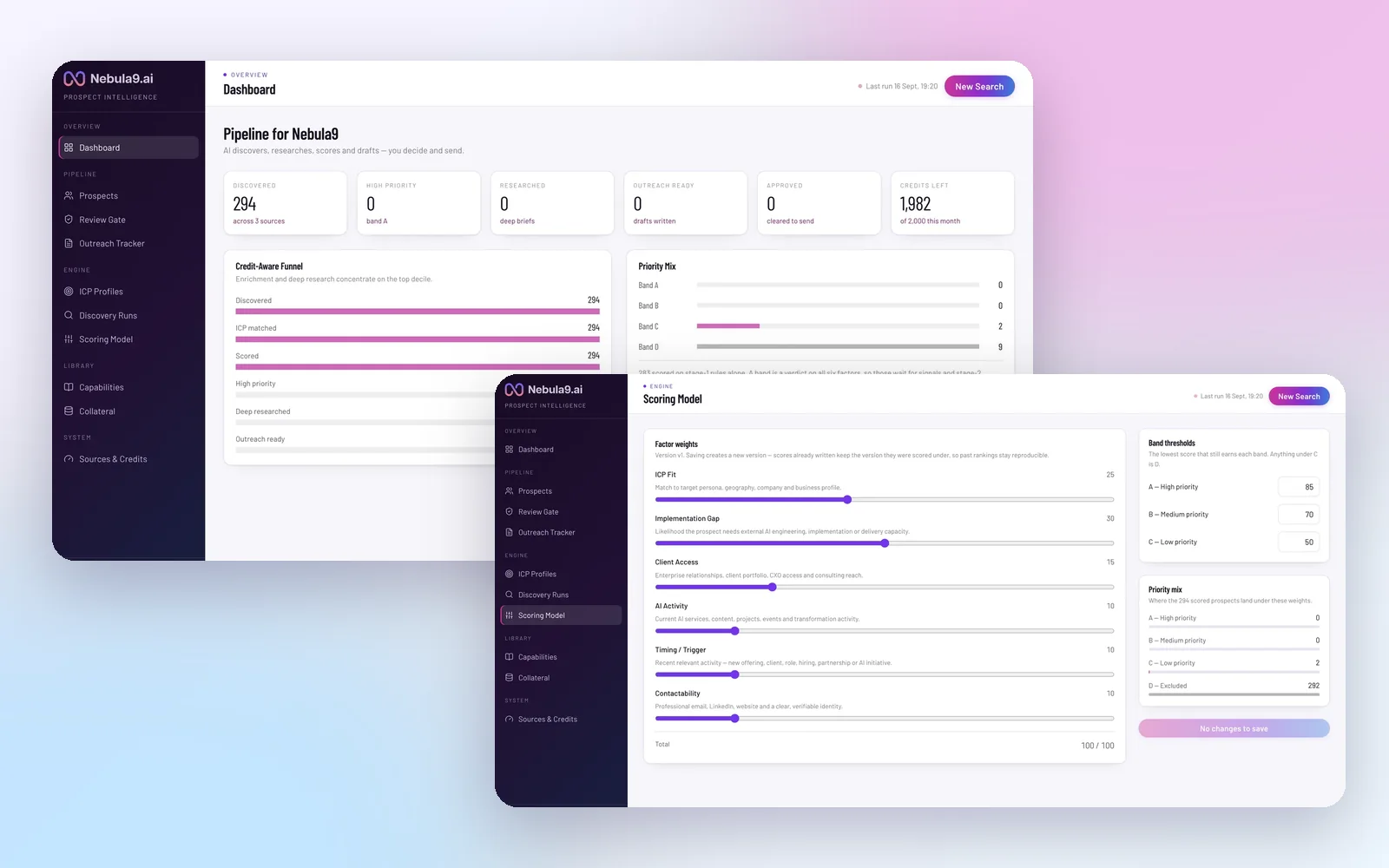
Prospect Intelligence EngineProspect Intelligence Engine built for SuprDense.
In production with SuprDense
Claude-powered prospect intelligence at SuprDense.
The platform is deployed in production and is used by SuprDense’s business development team as part of its ongoing prospecting and outreach workflow.
Claude by Anthropic turns prospect data and research into clear briefs that help teams prioritize prospects and draft personalized outreach.
- ~75% fasterProspect-to-outreach workflow
- 4× moreProspects evaluated
- ~80% lessManual research
Results from the SuprDense engagement, not a guarantee for every deployment.
…we now have one workflow that brings everything together.
“The Prospect Intelligence Engine has made our business development process much more efficient. Instead of manually finding prospects, researching companies, and drafting outreach, we now have one workflow that brings everything together.
We also like that human review is still part of the process. We get the relevant prospects and context, but every message is reviewed before it goes out. Nebula9 built something that fits naturally into how we work.”
 Nishant GuptaFounder, SuprDense
Product tour
See it in action.
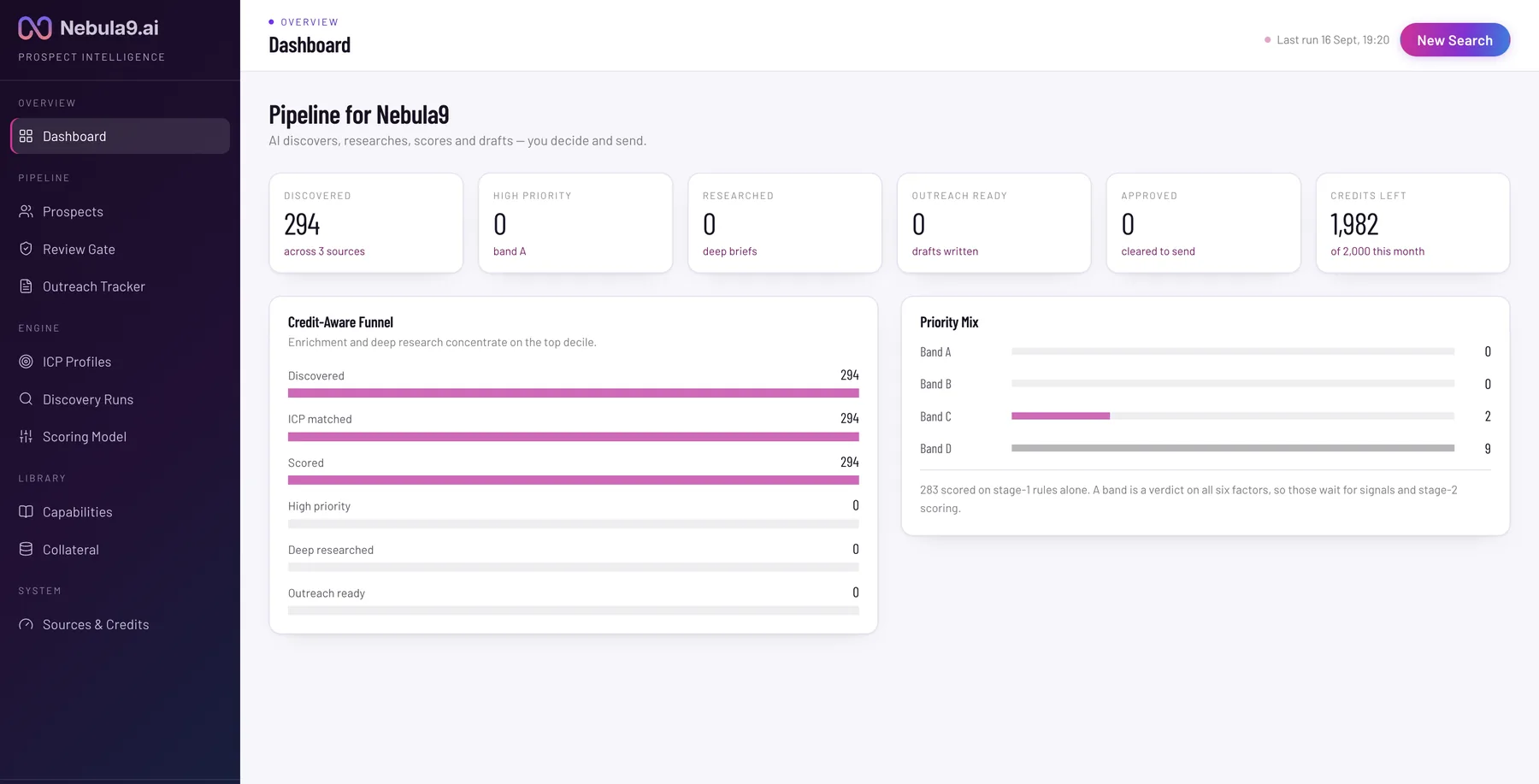
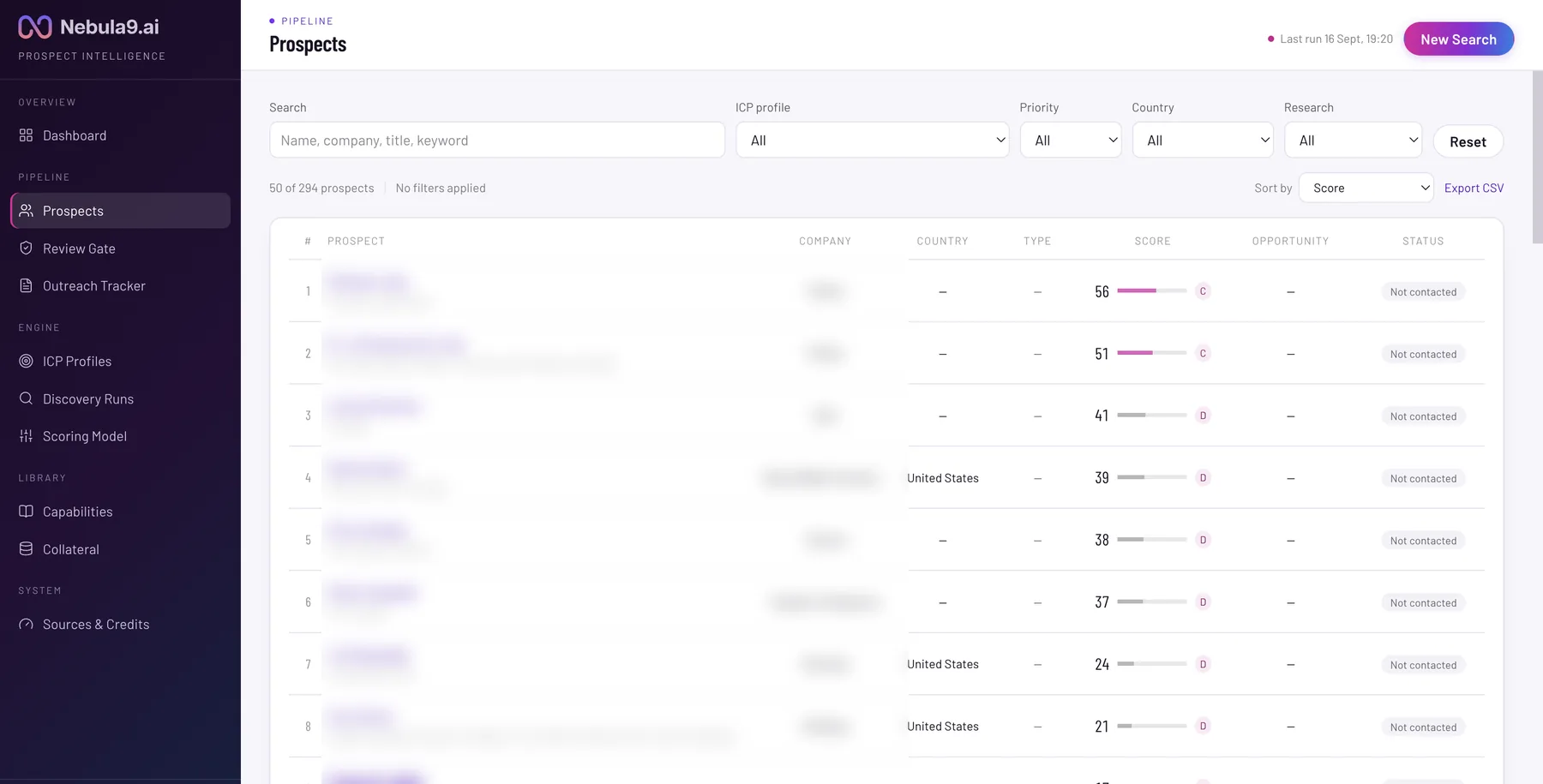
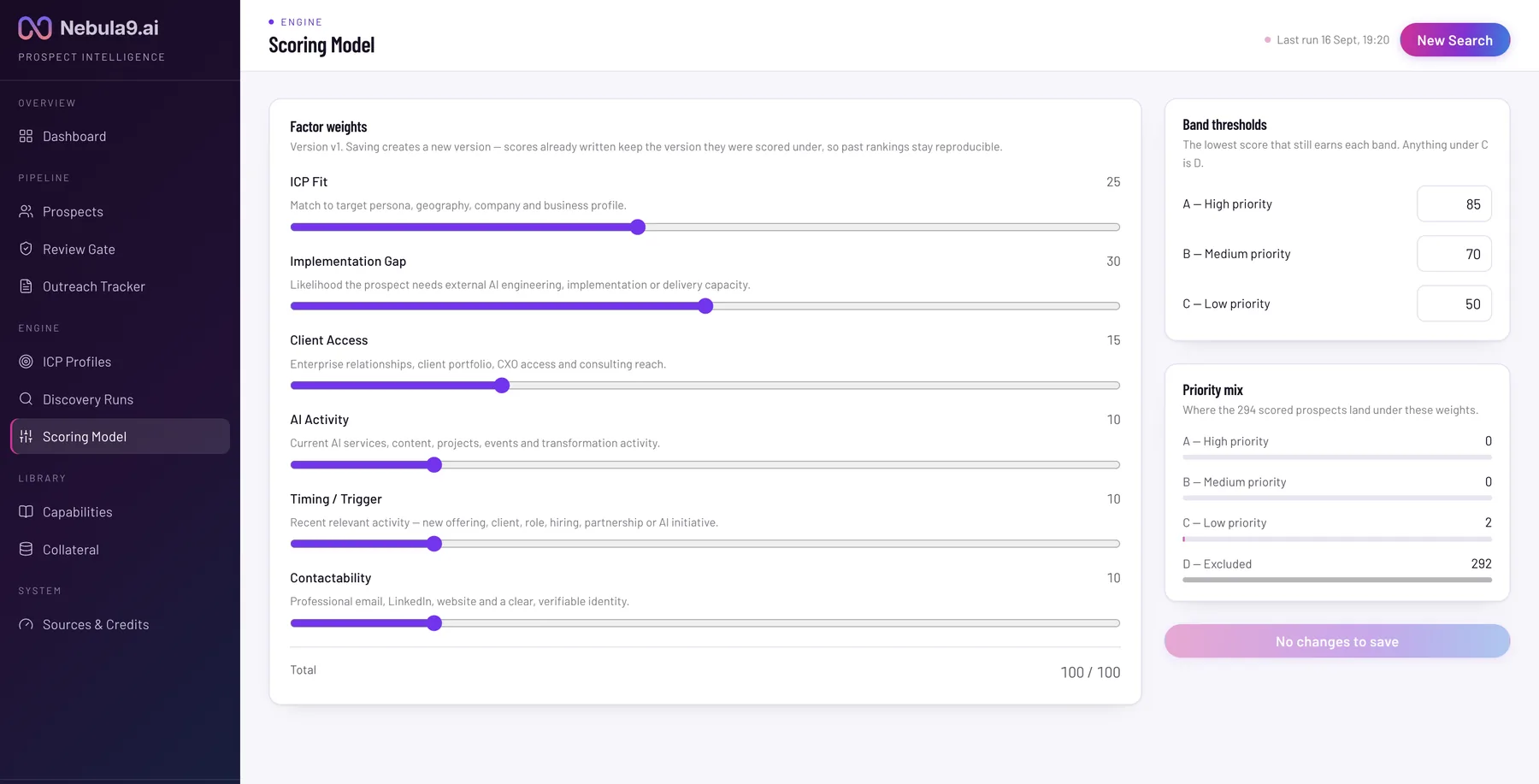
Screens from the Prospect Intelligence Engine.
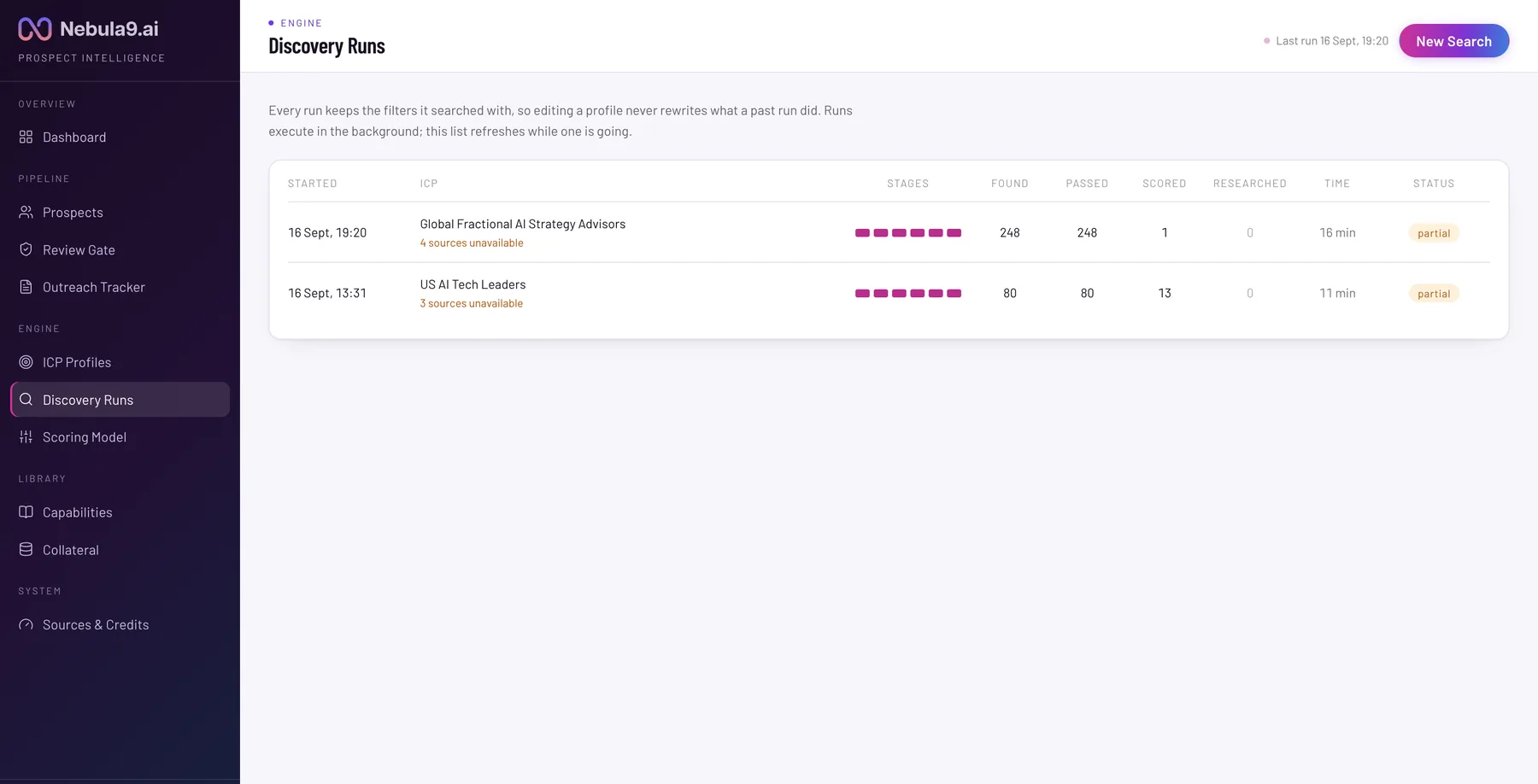
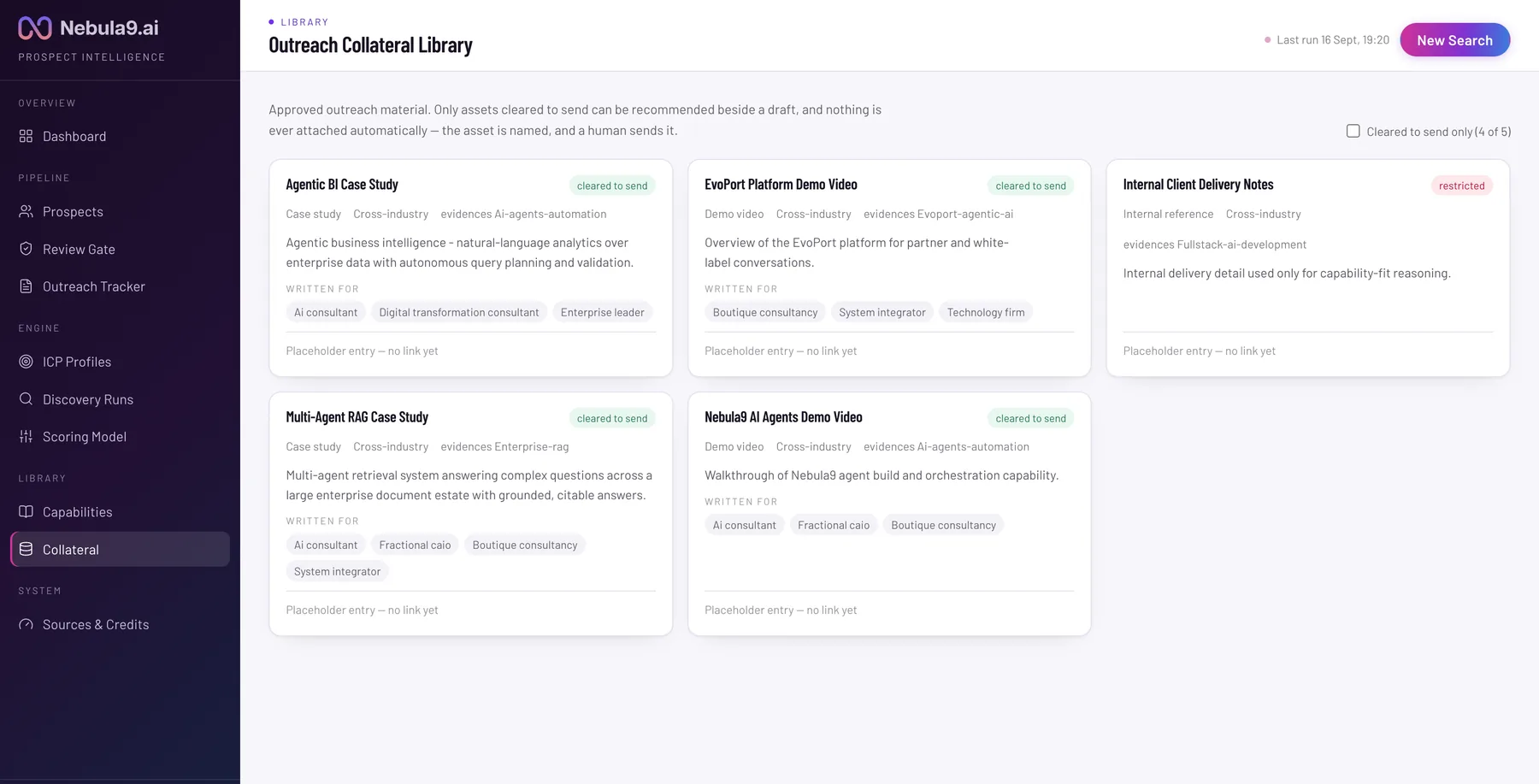
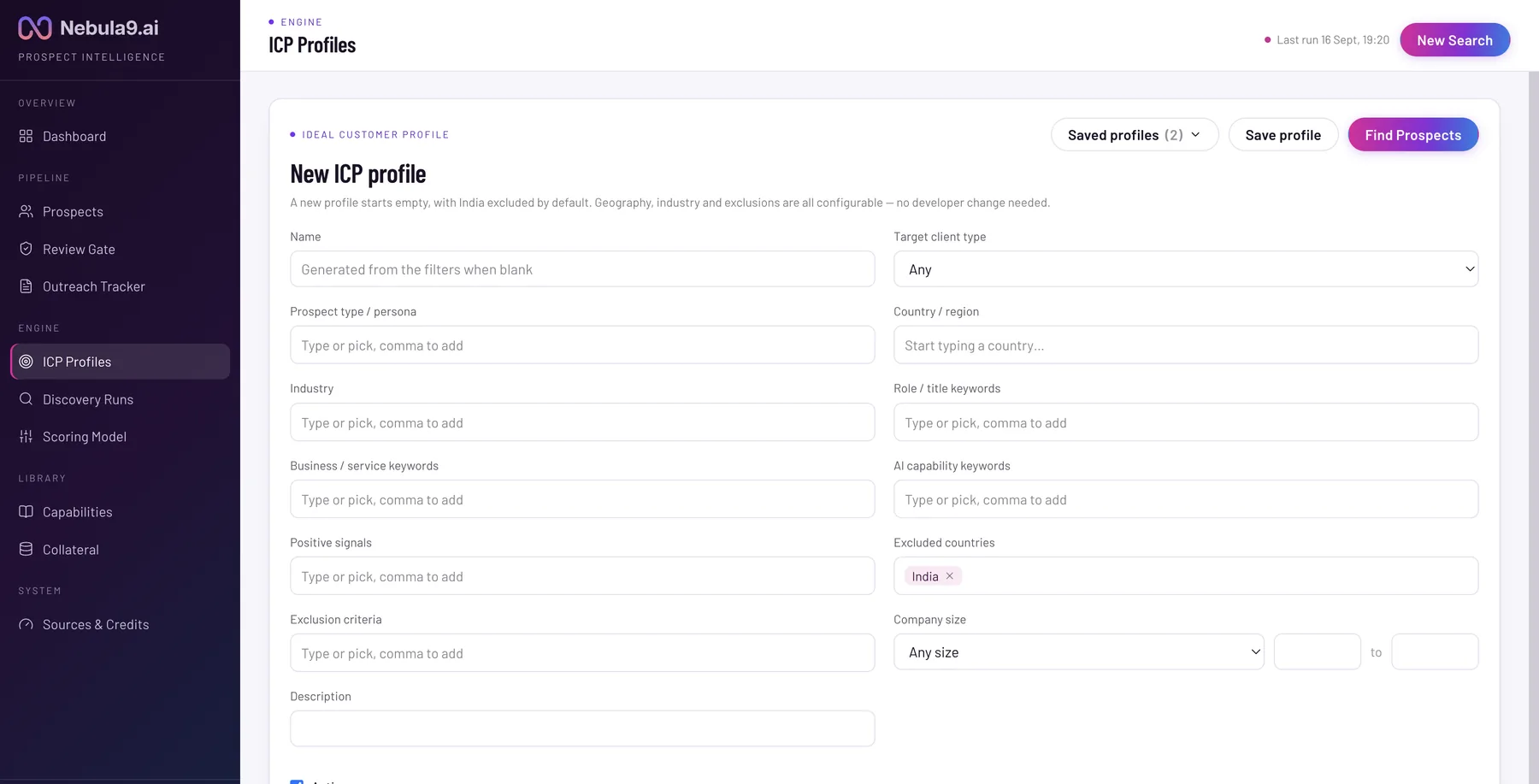
Core capabilities
What Nebula9 builds into this solution.
Each solution combines the capabilities, integrations, controls, and operating design needed for the workflow.
Combine relevant account fields, preserve their sources, and flag duplicate or conflicting records for review.
Show the factors and weights behind a prospect priority so the team can challenge the ranking.
Prepare sourced research for the accounts selected for deeper review instead of treating every record equally.
Compare documented account needs with your offer and explain why an account is a good fit.
Draft an account-specific message from reviewed context; do not send or attach material automatically.
Require a person to inspect the prospect, evidence, and proposed message before outreach.
Connect the systems where the work already happens.
Nebula9 maps source quality, permissions, refresh cadence, and review ownership before scaling the workflow.
Data-provider APIsPublic web sourcesIdeal customer profile definitionsCompany research sources
Illustrative examples
How the workflow could fit different teams.
These are example applications, not claims of completed client deployments. Data sources, automation boundaries, and success measures are agreed for each implementation.
Finds and ranks accounts that match the ideal customer profile, then prepares research-backed outreach for review.
Focuses research effort on the highest-potential prospects instead of spreading it across every lead.
Matches prospect signals to the right offer, with a person approving every message before it is sent.
What the first useful output could look like.
This example explains the proposed workflow, not a measured client result or a promise of a prebuilt integration.
- Starting point
- A team defines its target account criteria.
- Output to evaluate
- A prioritized prospect record includes the scoring factors, source links, and a research brief.
- Human decision
- A person checks fit and approves every outreach message before sending.
Confirm sources, permissions, supported integrations, test cases, and acceptance criteria during scoping.
Workflow architecture
Design the solution as an operating workflow, not a standalone AI tool.
A single workflow that discovers prospects across data providers and the public web, enriches and scores them against an ideal customer profile, researches the best ones, and drafts personalized outreach that a person approves before anything is sent.
Trigger and workflow
Define the event, user, queue, decision, or operating cadence that makes the solution valuable.
Data and intelligence
Connect trusted systems, documents, metrics, context, and retrieval paths behind the workflow.
Human review and governance
Add approvals, escalation, policy checks, access control, and audit evidence where needed.
Action and measurement
Route the result into work queues, apps, reports, service actions, or operating reviews.
EvoPort fit
Use EvoPort when this solution must be governed, repeated, and operated.
EvoPort supports reusable apps, specialist agents, approvals, audit trails, workflow execution, observability, and rollout controls after Nebula9 designs the operating model.
Explore EvoPort.ai- Apps and specialist agents tied to the workflow.
- Approvals, access, review gates, and audit history.
- Operational visibility, exceptions, and support cadence.
- Reusable rollout patterns across teams or industries.
Outcome measures to validate
Set the baseline before measuring change.
These are candidate measures, not reported client results. Agree the baseline, calculation, owner, and review period during discovery.
Decision path
Choose the right starting point for your team.
Start Prospect Intelligence Engine with the smallest useful workflow. Use the readiness scorecard to identify missing data, ownership, or controls before choosing a build or platform rollout.
Clarify business value, owner, data boundaries, review gates, success measures, and the smallest responsible first release.
Build the app, AI assistant, automation, analytics dashboard, integration or research workflow with safeguards built in.
Move to EvoPort when the solution needs reusable apps, agents, approvals, observability, audit history, and rollout control.
Define support, quality review, exception handling, release cadence, value tracking, and backlog ownership after launch.
FAQ
Common questions
How does this fit with our existing tools?
It brings prospect discovery, research, scoring and reviewed outreach into one workflow. We assess how it connects to your existing data providers and sales tools during scoping.
Does every implementation require EvoPort?
No. Nebula9 uses EvoPort when the solution needs reusable apps, agents, approvals, observability, audit history, and repeatable rollout control.
What is the best starting point?
Start with one workflow that has clear value, known users, accessible data, review ownership, and a measurable production outcome.
Who should join the first workshop?
The business owner, process owner, technology or data owner, and any risk, compliance, or operations stakeholder who controls adoption.
Enterprise readiness
Security, governance, and procurement questions have a clear review path.
Start with the public security hub, then request the legal and technical material needed for your procurement review.
Review security postureUse the security hub to review hosting, analytics consent, data handling boundaries, and procurement questions before a formal engagement.
Nebula9 scopes workflows around access, approvals, evidence, auditability, human review, and operating ownership.
Where EvoPort is used, the platform fit conversation covers permissions, approvals, observability, audit history, and deployment model.
Formal pricing, DPA, product terms, and security questionnaires are handled through the workshop and procurement review path.
Next step
Book AI Adoption WorkshopMap the first workflow for Prospect Intelligence Engine.
Use the workshop to define users, systems, data, review gates, platform fit, operating owner, and measurable production outcome.